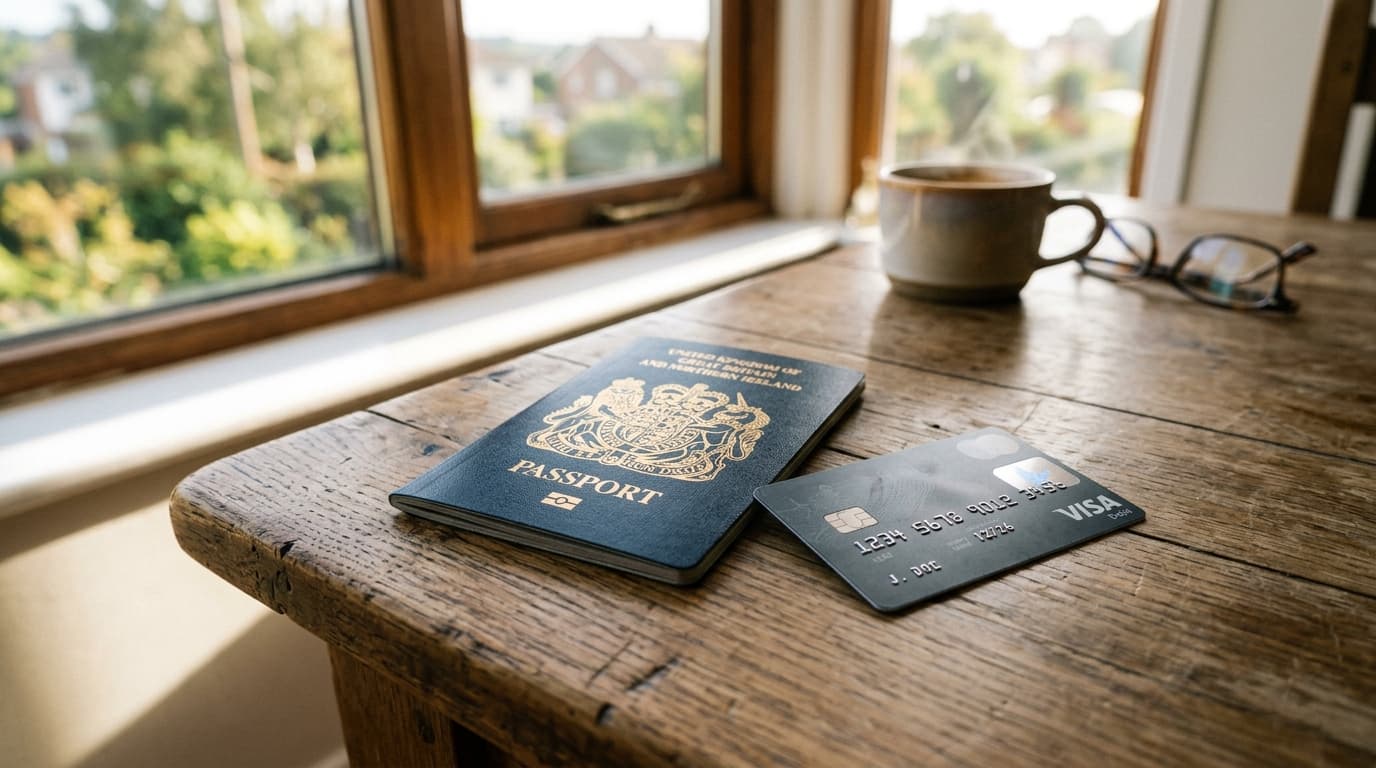
Your card works fine in Brussels, then refuses to pay at a supermarket till in New York or Bangkok. It is almost never a balance problem. In Belgium, the debit card is restricted outside Europe, and the credit card stays under the fraud engine's eye. Here is why your card blocks abroad, how to prepare it at Belfius, KBC and BNP Paribas Fortis, and what the Card Stop number is really for. Written for an English speaker living in Belgium.
Why is my card blocked abroad?
In the vast majority of cases, because non-Europe use is not enabled on your card, or because an unusual payment triggered the bank's fraud monitoring. It is not a fault, it is a security setting.
Belgian banks apply geographic blocking by default to limit fraud. Concretely, your card is allowed in Europe and closes automatically beyond it, unless you opened it beforehand. On top of that sits a second layer: even an unblocked card can be frozen if the algorithm spots a purchase that breaks your habits, like a first payment on the far side of the world at three in the morning.
In practice the two mechanisms stack, and one hides the other: the message shown on the terminal never tells you whether the refusal comes from the geographic setting or from fraud monitoring. The useful reflex is therefore not to call in a panic, it is to check the card's usage zone in the app first, then the notifications received in the minutes following the decline.
Debit or credit card: which one blocks abroad?
It is the debit card that causes trouble most often, not the credit card. The Belgian debit function is limited to the Europe zone, while the Visa or Mastercard credit card is accepted worldwide by default.
The tipping point has a precise date. Since 17 January 2011, the Maestro function of Belgian debit cards has been restricted to countries in the Europe zone, their overseas territories and Israel. In other words, your bank card pays without trouble in Spain or Italy, but not in Marrakech or Istanbul without unblocking. Belfius puts it plainly on its pages: within the European zone the debit card is enough, outside it, use your credit card.
What this means for you: the credit card is not just a convenience, it is your safety net outside Europe. It settles the hotel, the car rental and the medical surprise where the debit card stays silent. That is the most concrete argument for holding a credit card if you travel, even once or twice a year. Watch the detail: it too can be frozen by fraud monitoring, so owning it does not spare you from preparing it.
How do you enable your card for abroad, bank by bank?
In your bank's app, in seconds, before you leave. Each major Belgian bank offers a self-service geographic setting, with different paths and durations. Here are the main ones side by side, which nobody publishes together.
| Bank | Setting to enable | Channel | Duration / frame |
|---|---|---|---|
| Belfius | Use abroad | Belfius Mobile (Settings, Cards, Manage permissions) or Belfius Direct Net | 3 months maximum |
| KBC | Standard region or temporary derogation | KBC Mobile or KBC Touch | Durable setting or one-off derogation |
| BNP Paribas Fortis | Card usage zones | Easy Banking app and web | Editable at any time |
| ING | Card use and zones | ING Banking app | Editable in the app |
The verdict fits in one line: the gesture is the same everywhere, open use outside Europe, but the wording changes. Belfius talks about permissions and caps at three months, KBC separates the standard region, which you set durably, from the temporary derogation for a single trip, and BNP Paribas Fortis gathers it all in Easy Banking. Do it calmly a few days before leaving, not at the cash machine once you have arrived.
Should you enable both the debit and the credit card?
Check both, but they are not set the same way. The debit card needs the non-Europe activation to work beyond the zone. The credit card already works worldwide, but you can also place geographic limits on it in some apps, so make sure you have not restricted it by accident. When in doubt, a look at each card's settings clears the ambiguity.
Is the setting free?
Yes. Opening or closing usage zones costs nothing, it is an included security feature. Any fees on a payment abroad depend on the card and currency, an entirely different matter from geographic unblocking.
What should you do if the card blocks once you're there?
Start with the simplest thing before calling anyone. Check your notifications, open the app, and only reach for Card Stop as a last resort, because it blocks everything permanently.
Three steps, in order. First, check your SMS, emails and push notifications: the bank may have tried to validate a suspicious transaction, and a simple approval on your side is enough to unblock it. Then open the app to re-enable use abroad or raise a limit you may have forgotten. Finally, if nothing works, call your bank's helpline, which can lift a fraud block remotely.
Watch the detail: only dial Card Stop, on 078 170 170, for a loss, a theft or real fraud. This 24/7 service blocks all your cards and triggers their replacement. That blocking is irreversible: the card is cancelled on the spot and the new one is posted to your Belgian address, which leaves you without a means of payment until you get home. Dialling that number for a simple decline at the till, when all that was missing was a zone setting, therefore costs far more than the original problem.
Do you need to warn your bank before leaving?
Warning the bank is no longer required everywhere, but preparing your cards remains essential. The real work happens in the app, not on the phone.
Before a non-Europe trip, open out-of-zone use on your debit card, check that your credit card is not restricted, and adjust the limit if needed for a planned large purchase such as a rental deposit. Keep your smartphone connected on site: it is how fraud validations reach you, and how you reopen a card in two taps. Carrying a credit card alongside the debit card remains the best insurance, precisely because one takes over when the other closes.
FAQ
The questions above cover the most common cases. To see why the credit card stays essential when travelling, read our guide to paying abroad without fees and the comparison of Belgian cards.
Comparator Traditional banks
Compare side by side.
Compare now →
Frequently asked questions
Keep reading
Sophie L. worked eight years in a Belgian bank branch, first as a credit adviser and then in customer relations, before going independent in 2021 and settling in Louvain-la-Neuve. Her work starts with the issuers' official fee schedules, from the high-street banks (ING, BNP Paribas Fortis, KBC, Belfius) to the neobanks (Revolut, N26, Wise), reduced to five comparable lines: annual fee, currency conversion charge, borrowing rate, spending limits and bundled insurance. Every price on this site carries the date it was checked: the annual-fee grid was gone through line by line on 12 August 2026, after Belfius moved its Beats Star package to 5.90 € a month in February. If an issuer does not publish a figure, she writes that down instead of estimating it. For readers who moved to Belgium, she spells out what a Belgian issuer expects from an applicant with no local credit history.