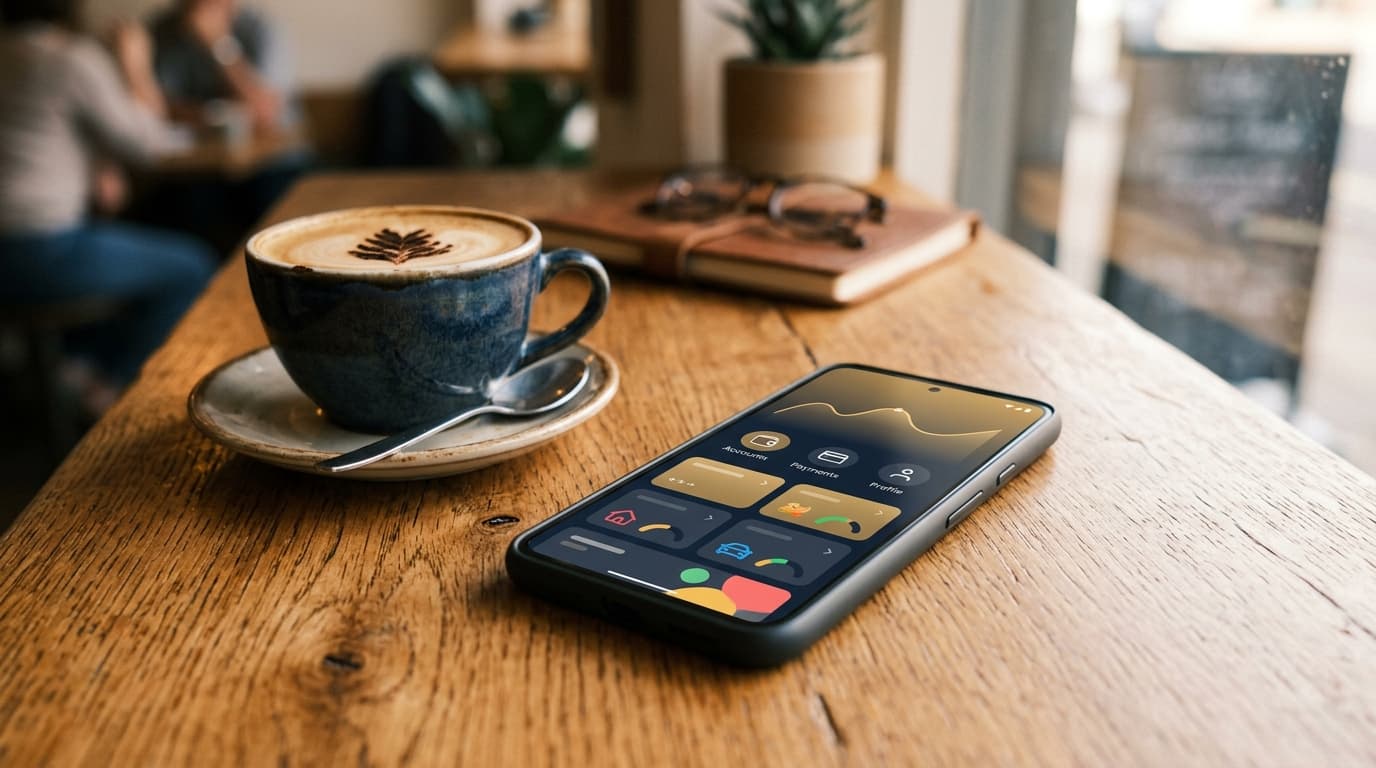
A disposable virtual card regenerates its number after every payment, which makes it ideal for buying once from an unknown seller. In Belgium, only one neobank genuinely offers it: Revolut. bunq, N26 and Wise provide virtual cards too, but fixed ones you freeze or delete by hand. Before choosing, you need to tell the two apart, because they serve different purposes, and neither shields you from the most common fraud in Belgium.
What exactly is a disposable virtual card?
A disposable virtual card is a payment card with no plastic whose number becomes useless after a single purchase. The app generates a new one each time, so the merchant never keeps a number that is still live. It is the highest degree of compartmentalisation for an online payment.
It should not be confused with the fixed virtual card, which people often mix it up with. A fixed virtual card keeps the same number over time: it lets you isolate your subscriptions from your main card, but if the merchant is breached, that number leaks like any other. The disposable card, by contrast, is already dead when the leak happens. In practice, the fixed card organises your payments, the disposable card protects a one-off purchase.
A Belgian example makes the nuance useful. You order once from a little-known marketplace found through an Instagram ad, shipped from abroad, with no idea how serious the site is. That is the textbook case for a disposable card: you pay, the number switches off, and even if the seller resells your data, they no longer hold anything valid. For your streaming subscription, on the other hand, a disposable card would be absurd, since it would cut the service on the second charge.
Which neobank offers a real disposable card in Belgium?
In Belgium, Revolut is the only neobank offering a truly disposable card, and it does so from its free Standard plan. The three other major neobanks available here, bunq, N26 and Wise, only issue fixed virtual cards. This is a difference in kind, not in price.
In practice, the workaround with fixed cards is to freeze or delete the card after a risky purchase, then create a new one. It works, but it takes a manual step each time, where Revolut's disposable card does it on its own. Revolut also lets you keep up to twenty reusable virtual cards on one account, with four new creations per month on the free plan, which leaves room to dedicate a card to each recurring merchant.
| Neobank | Free virtual card | Disposable card | Plan required | Network |
|---|---|---|---|---|
| Revolut | Yes, up to 20 | Yes, number regenerated | Free Standard | Visa or Mastercard |
| bunq | Yes, 1 | No | Free | Mastercard |
| N26 | Yes, 1 | No | Free Standard | Mastercard |
| Wise | Yes, up to 3 | No | Free | Mastercard |
Do you need a paid plan for Revolut's disposable card?
No. The disposable card is part of the free Standard plan, with no balance requirement. The paid Plus, Premium or Metal plans add insurance and higher limits, but none of that is needed to create a single-use card. One detail worth noting: the physical Revolut card may be charged on order depending on the country and current promotion, whereas the virtual side stays free.
And for a subscription like Netflix or Spotify?
Never use a disposable card. The number changes after the first charge, so the second month is declined and the subscription stops. For any recurring payment, streaming, gym, cloud storage, you need a fixed virtual card that you keep and can freeze with one tap if the price rises or you want to stop. A fixed card freezes and unfreezes from the app without losing its number: that is exactly what a disposable card cannot do.
Why doesn't a disposable card protect you from Belgium's most common fraud?
Because a virtual card only defends against a leak of your number, not against phishing, which remains the top fraud in Belgium. In a phishing attack, nobody steals your card: you are manipulated into approving the payment or transfer yourself, often by confirming via itsme. The disposable card blocks nothing, since you are the one pressing the button.
The figures frame the stakes. According to Febelfin, the Belgian financial sector federation, phishing siphoned nearly 49 million euros in 2024, even though banks detected, blocked or recovered around 75 percent of fraudulent transfers. The same study notes that 13 percent of surveyed Belgians have already been phishing victims, and that 23 percent of 16-to-30-year-olds had never heard of this fraud. A disposable card counts for nothing against that risk.
What this means for you: a virtual card, disposable or fixed, is a good tool against merchant data leaks, a real but secondary loss driver by volume. Against phishing, only the habit of vigilance matters, never confirming a payment demanded by an urgent message, checking the caller's identity, not approving in itsme without understanding what you approve. The best disposable number in the world does not replace that reflex.
Disposable or fixed virtual card: which should you choose?
For most online shoppers in Belgium, a fixed virtual card that you freeze after a shady purchase covers 90 percent of needs, and the disposable card is only genuinely useful for the very first purchases from an unknown seller. In other words, the disposable card is a special case, not the default tool.
My reasoning rests on the fact that a disposable card is unusable in two common situations. The first is the subscription, already mentioned. The second is a purchase that may be refunded or held: a car rental, a hotel deposit, an item you might return. The merchant needs to find the original card to refund you or release the hold, and a switched-off number prevents that.
So the right move is a division of labour. One fixed virtual card per major recurring use, one disposable card kept for trials and first purchases from never-tested sellers. If you only have one free virtual card, as with bunq or N26, keep it for your subscriptions and pay for risky purchases with a card you delete straight after. The result is close to the disposable card, at the cost of a manual step.
FAQ
These questions come up among online shoppers in Belgium. To go further, compare cards with our comparator, read our full Revolut Belgium review and our Belgian neobanks comparison.
Comparator Neobanks
Compare side by side.
Compare now →
Frequently asked questions
Keep reading
Sophie L. worked eight years in a Belgian bank branch, first as a credit adviser and then in customer relations, before going independent in 2021 and settling in Louvain-la-Neuve. Her work starts with the issuers' official fee schedules, from the high-street banks (ING, BNP Paribas Fortis, KBC, Belfius) to the neobanks (Revolut, N26, Wise), reduced to five comparable lines: annual fee, currency conversion charge, borrowing rate, spending limits and bundled insurance. Every price on this site carries the date it was checked: the annual-fee grid was gone through line by line on 12 August 2026, after Belfius moved its Beats Star package to 5.90 € a month in February. If an issuer does not publish a figure, she writes that down instead of estimating it. For readers who moved to Belgium, she spells out what a Belgian issuer expects from an applicant with no local credit history.