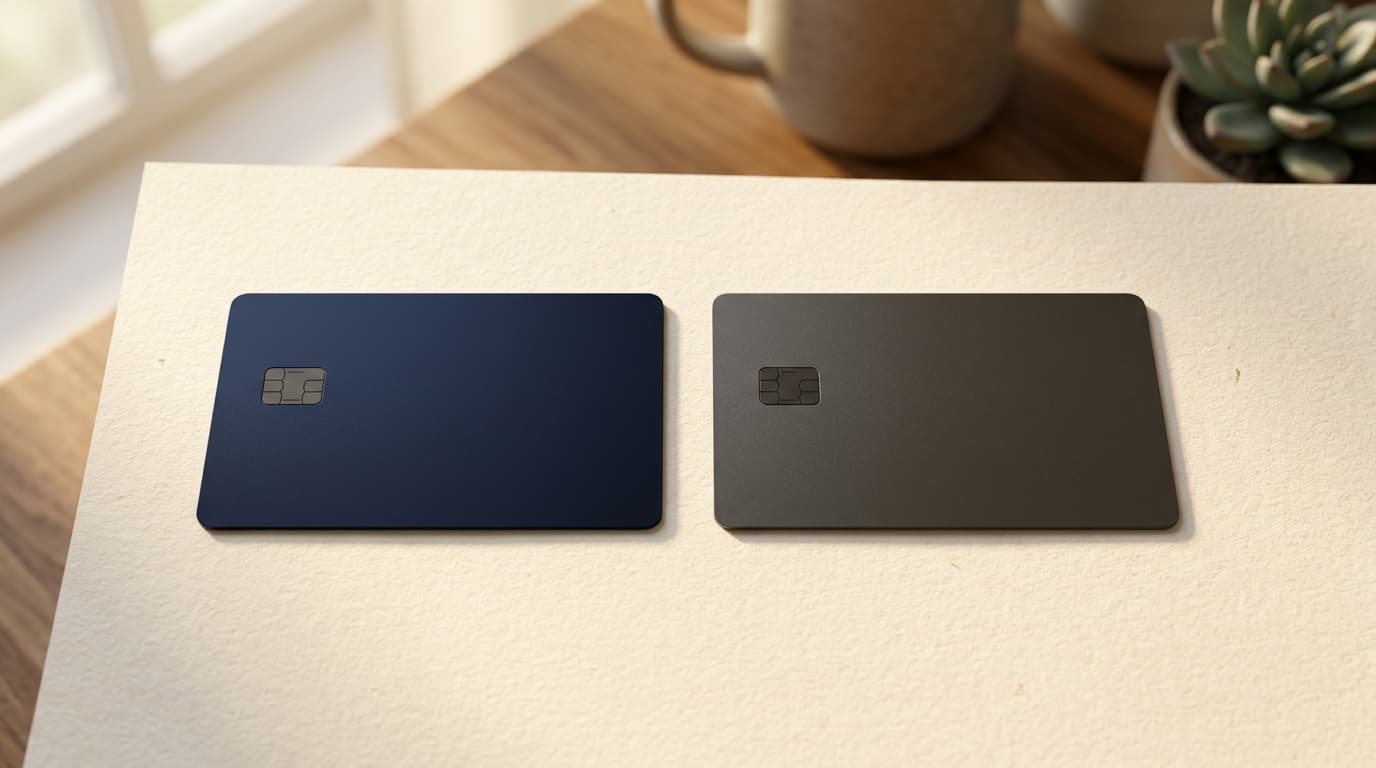
No: neither Revolut, nor N26, nor Wise issues a credit card to a Belgian resident. Their cards are debit cards, taken from your available balance the moment you pay. Only bunq issues a card flagged as credit on the Mastercard network, with no credit line behind it. Here is what that distinction changes at hotels, rental desks and on your statement.
Do Revolut, N26, bunq and Wise issue a real credit card?
No, none of the four grants credit to a Belgian customer. What you hold is a debit card: the payment leaves the account immediately, there is no usable credit line, no monthly statement to settle, and no borrowing rate.
Revolut documents this itself, and it is the clearest source on the market. Its help page on credit-eligible countries lists six markets where you can apply for a Revolut credit card: Brazil, Ireland, Lithuania, Poland, Spain and the United States. It lists eleven for personal loans, including France, Germany and Italy. Belgium appears on neither list, checked on 18 August 2026. N26 issues a Mastercard Debit across its four Belgian plans, from the free account to Metal. Wise issues a Visa Debit backed by your multi-currency balances.
In practice, the confusion comes from the vocabulary of Belgian comparison sites, which happily file Revolut under « credit cards » because the card carries a Visa or Mastercard logo. The logo tells you the acceptance network. It tells you nothing about how the payment settles.
Why does no neobank grant credit in Belgium?
Because lending to a Belgian consumer requires an authorisation that a banking licence does not include. Consumer credit falls under Book VII of the Belgian Economic Law Code, and it is the FSMA that authorises lenders and registers credit intermediaries, subject to conditions on central administration, legal form and minimum capital.
A passported European banking licence is enough to hold accounts and issue debit cards across the twenty-seven member states. It is not enough to open a revolving credit line to a Belgian household. That is a separate file, a separate supervisor, in a market of eleven million people where six banks already control distribution. The commercial arithmetic is easy to follow.
What this means for you: the absence of credit at Revolut or N26 is not a product gap, it is a regulatory boundary. It even works in your favour, since a debit card opens no agreement recordable at the National Bank's Central Individual Credit Register. A Revolut card cannot get you registered.
Which neobank card clears a hotel or rental deposit?
One only: the bunq Credit Card. It is issued on a Mastercard credit identifier, with a Belgian identifier for cards delivered in Belgium, so the rental desk terminal reads it exactly like a conventional credit card. The money, however, leaves your account instantly.
| Card | Technical type | Seen by the merchant | Hotel or rental deposit | Actual credit |
|---|---|---|---|---|
| Revolut, Standard to Ultra | Visa or Mastercard Debit | Debit | Often refused | No, not in Belgium |
| N26, free to Metal | Mastercard Debit | Debit | Often refused | No |
| bunq, Mastercard card | Mastercard Debit | Debit | Often refused | No |
| bunq Credit Card | Mastercard credit, Belgian identifier | Credit | Accepted | No, instant debit |
| Wise | Visa Debit | Debit | Often refused | No |
| Belgian bank credit card | Visa or Mastercard credit | Credit | Accepted | Yes, monthly deferred debit |
Checked on 18 August 2026 against the official pages and help centres of the four issuers.
Is the bunq Credit Card really a credit card?
Yes on the network, no on the credit. bunq says so plainly in its Credit Card FAQ: it is an official credit card, designed so that you cannot fall into debt. The amount leaves the account immediately, and the statement carries two dates, the payment date and a settlement date set to the first of the following month. A payment made on 14 April shows a settlement date of 1 May, even though the money is already gone.
One detail matters: the physical card is only included on the paid bunq Core, Pro and Elite plans. On bunq Free you get a virtual credit card, which is no help at a rental counter that wants plastic in the driver's name. Replacing a lost card costs 9.99 euros, and a fourth active card is billed at 3.49 euros per month.
Is a debit card enough at a car rental desk?
Rarely for the deposit, often for the final payment. Large international rental firms hold a pre-authorisation of several hundred euros and require a credit card in the driver's name to do so. A card printed with « debit » is refused at most counters, or triggers the excess waiver sold on the spot.
The bill climbs fast: the excess waiver bought at the counter commonly runs 200 to 250 euros for the week, accepted under pressure so as not to lose the booking. Conditions vary from country to country within the same brand, so check the local branch terms rather than the national website. Our guide on renting a car with a credit card covers the detail.
What do you actually lose without a real credit card?
Three things, two of which matter. Cash-flow timing first: a Belgian credit card runs on monthly deferred debit, which leaves two to four weeks on average between the purchase and the direct debit. A debit card gives you none of that breathing room.
Insurance second. Trip cancellation, assistance and purchase protection cover still sits mainly with the premium credit cards of Belgian banks. Neobanks offer cover too, but attached to the monthly subscription rather than to the card, which changes what triggers it. Our guide to credit card insurance sets out the conditions.
Acceptance third, and here the logic reverses. bunq warns in writing that credit cards are not accepted everywhere in Belgium, the Netherlands and Luxembourg: many shops take debit only, and Bancontact remains the national reflex. The card that unlocks the rental desk in Alicante is not the one that pays for bread in Namur.
Should you keep a Belgian credit card alongside your neobank?
Yes in three cases, no in all others. Keep a Belgian credit card if you rent cars, if you book hotels outside Europe, or if you rely on travel insurance attached to the card rather than to a subscription. In those three situations, a neobank on its own will let you down eventually.
For everything else, the maths tilts the other way. A neobank debit card handles daily payments, online purchases and euro-zone travel, often with no exchange fees, where a Belgian credit card costs between 15 and 60 euros a year depending on the issuer. The cheapest pairing is a credit card already included in a Belgian banking package you are paying for anyway, plus a neobank for currency exchange and day-to-day spending.
FAQ
These questions come up constantly among Belgian residents convinced they are carrying a credit card. To go further, compare the offers with our comparison tool, read our Belgian neobank comparison, our guide to the difference between credit and debit cards and our Revolut Belgium review.
Comparator Neobanks
Compare side by side.
Compare now →
Frequently asked questions
Keep reading
Sophie L. worked eight years in a Belgian bank branch, first as a credit adviser and then in customer relations, before going independent in 2021 and settling in Louvain-la-Neuve. Her work starts with the issuers' official fee schedules, from the high-street banks (ING, BNP Paribas Fortis, KBC, Belfius) to the neobanks (Revolut, N26, Wise), reduced to five comparable lines: annual fee, currency conversion charge, borrowing rate, spending limits and bundled insurance. Every price on this site carries the date it was checked: the annual-fee grid was gone through line by line on 12 August 2026, after Belfius moved its Beats Star package to 5.90 € a month in February. If an issuer does not publish a figure, she writes that down instead of estimating it. For readers who moved to Belgium, she spells out what a Belgian issuer expects from an applicant with no local credit history.