This article is being re-checked against official sources. The fees it quotes may be out of date: the reference figures are those of the comparator, read on the issuers’ pages on 19 November 2026.
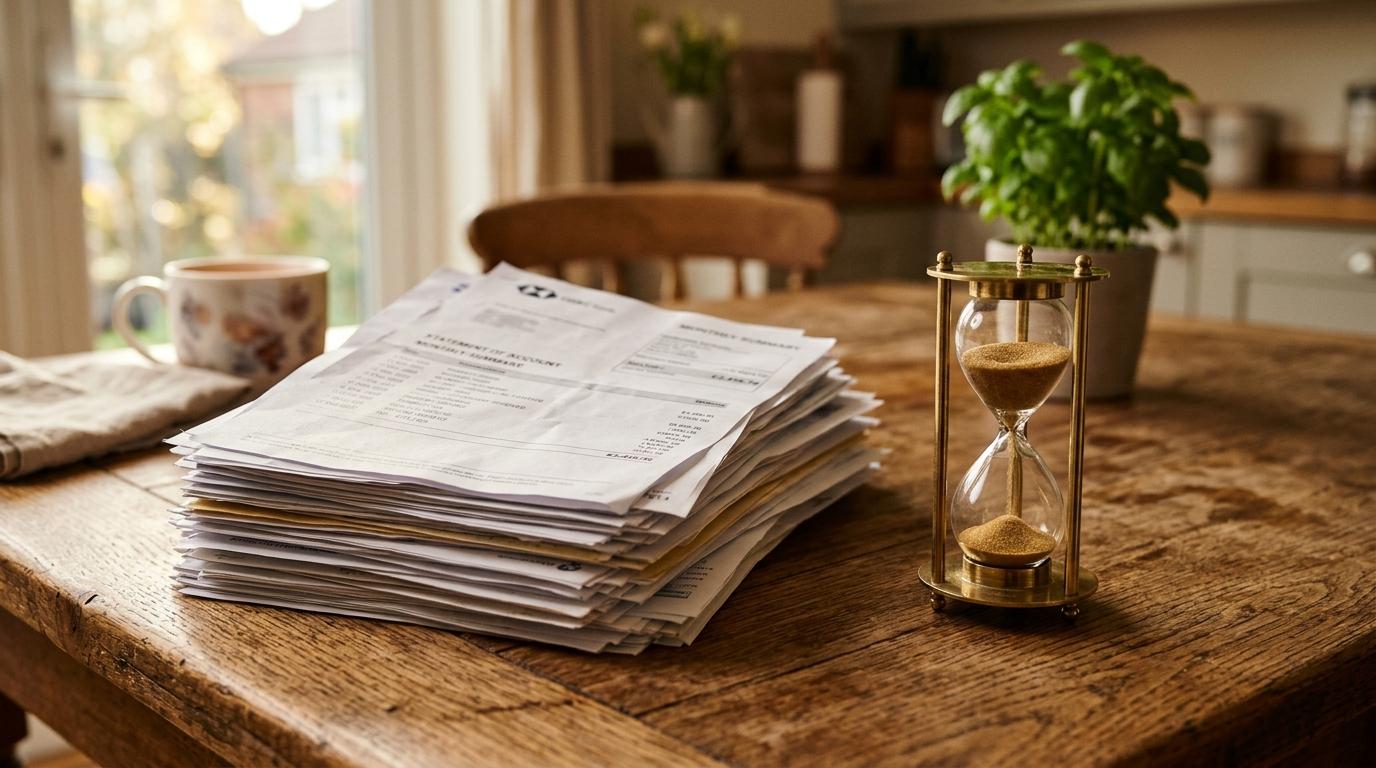
Paying only the minimum on a Belgian credit card is expensive: on 2,600 euros, at the Beobank Extra Mastercard rate, it takes 59 payments and 590.72 euros of interest to clear, against 193.15 euros over twelve equal instalments. And above about 2,900 euros, the minimum is no longer enough to meet the zero-balance deadline.
Our page on the credit card zero-balance deadline already compares repayment paces without interest, and the repayment guide explains the difference between deferred debit and a credit line. This page isolates a single item, the interest the minimum adds month after month, in a simulation re-run on 17 November 2026.
What minimum does a Belgian credit card require?
A fraction of the balance, with a 25 euro floor. Article 14, § 2, of the Royal Decree of 14 September 2016 sets, for credit lines with monthly capital repayment, a minimum instalment of 1/18, 1/24 or 1/36 of the outstanding balance depending on the credit amount, never below 25 euros, according to the annotated reproduction by Credit2Consumer (page of 22 September 2020). Wikifin, the financial education site of the FSMA, updated on 14 July 2026, gives one-eighteenth for credit lines up to 5,000 euros.
Issuers dress the rule up in their own way. The check made on 17 November 2026:
| Issuer and product | Monthly minimum | Floor | Published rate | Document |
|---|---|---|---|---|
| Beobank Extra Mastercard | 1/18 of the amount due up to 5,000 EUR, 1/20 above | 25 EUR | Actuarial borrowing rate 14.30%, APR 15.99% on 2,600 EUR | SECCI, undated |
| Buy Way, credit line with card | 5.60% of the total amount due up to 5,000 EUR | Not stated | Borrowing rate 16%, APR 15.73% from 1,250 to 5,000 EUR | Financial services tariffs, undated |
| Belfius Mastercard Flex New | 6% of the balance due | 25 EUR | 9.13% actuarial borrowing rate in the example | Product page, example dated 2013 |
The detail that changes the arithmetic sits in the Beobank SECCI (the standard European consumer credit information sheet): the fraction applies to the amount due, including the month's interest, and the fee comes on top. The first minimum on a single 2,600 euro drawing is 146.06 euros there. My simulation lands on that figure to the cent, which validates the method. Rates charged by other issuers are gathered in our guide to credit card interest rates, and the short definition of the minimum repayment is in our fees glossary.
On 2,600 euros, the minimum costs three times more than twelve instalments
I ran four paces on the same credit. Assumptions: 2,600 euros drawn in one go, no new purchases, a constant 14.30% actuarial rate, or 1.120% a month, annual fee left aside. The fourth pace, twelve equal instalments, is the one Beobank uses to calculate its APR.
| Repayment pace | First payment | Number of payments | Interest paid | Balance due after 12 months |
|---|---|---|---|---|
| One-eighteenth minimum | 146.06 EUR | 59 | 590.72 EUR | 1,496.71 EUR |
| Instalments of one-twelfth of the balance | 219.09 EUR | 42 | 376.51 EUR | 1,046.06 EUR |
| Fixed transfer of 150 EUR | 150.00 EUR | 20 | 307.04 EUR | 1,056.67 EUR |
| Twelve equal instalments | 232.76 EUR | 12 | 193.15 EUR | 0 EUR |
The fixed transfer line is the surprise. It starts lower than the one-twelfth, yet costs 69 euros less. Any fraction of the balance shrinks with it: the payment falls every month and the capital drags on accordingly, whereas a fixed amount keeps its strength to the end.
My advice is therefore never to let the direct debit decide alone. At 2,600 euros, a transfer of 150 euros a month saves 283.68 euros and three years of repayment compared with the minimum, without changing card or bank. Interest weighs more here than the annual fee of most cards sold in Belgium, as our pillar on what a credit card really costs shows.
Ten years on the minimum is not allowed under Belgian law
The Canadian or French simulations doing the rounds show card debts dragging on for ten years. In Belgium that scenario does not exist for a card backed by a credit line with monthly instalments, because the zero-balance deadline cuts it off: 60 months at most up to 5,000 euros, 96 months above, under the same Article 14, § 3. Eight years, at most.
The minimum still follows its slope. On Beobank's 2,600 euros, year by year:
- after 1 year, 1,496.71 euros still owed and 274.74 euros of interest already paid;
- after 2 years, 861.59 euros owed and 432.90 euros of interest;
- after 3 years, 495.98 euros owed and 523.94 euros of interest;
- after 4 years, 242.22 euros owed and 575.07 euros of interest;
- at the 59th payment, 0 euros and 590.72 euros of interest in total.
After three years, the interest paid exceeds the remaining balance.
For a credit of 8,000 euros repaid at one-twentieth, at the same rate by assumption, it takes 92 payments and 2,203.40 euros of interest, just under the 96-month bar. The law caps the duration. It does not cap the bill.
From what balance does the minimum overrun the zero-balance deadline?
Around 2,900 euros, at 14.30%. I re-ran the simulation in steps of 100 euros: up to 2,800 euros, the minimum clears in 60 payments or fewer; at 2,900 euros it takes 61, and the count then rises by one payment every 175 euros or so, up to 73 payments at 5,000 euros. At that amount, 290.58 euros are still owed at the 60th month.
The deadline starts running within the two months following the first drawing, according to the SECCI, which gives a little room without changing the finding. Beobank's terms also provide that the amount to pay may exceed the minimum in order to meet the zero-balance deadline, without saying when or by how much the bank raises it. I have read no real statement showing that increase. The two legal regimes and their caps are set out on our zero-balance page, which measures the same effect without interest.
In June, our repayment guide estimated that a 1,000 euro purchase repaid at the minimum was cleared in about eighteen months, for more than 150 euros of interest. At 14.30%, my simulation gives 38 payments and 192.29 euros. The eighteen-month figure matches a constant instalment of one-eighteenth of the initial amount; the real minimum is calculated on a balance that keeps shrinking.
At Buy Way and Belfius, the rate weighs more than the fraction
Beobank, Buy Way and Belfius all ask for between 5.56% and 6% of the balance a month. Their bills, though, range from single to double. On the same 2,600 euros drawn in one go, Buy Way's 5.60% fraction at a 16% borrowing rate takes 60 payments and 667.19 euros of interest. Belfius's 6%, at the 9.13% actuarial rate in its product page example, takes 52 payments and 329.53 euros. Beobank sits in between, at 590.72 euros.
This head-to-head has weak points, and I would rather set them next to the figures. The Buy Way grid carries neither a date nor a product name, and it shows a borrowing rate above its APR, 16% against 15.73%, with no explanation for the gap that I could find in the document; I calculated on the borrowing rate. The Belfius example runs from April to July 2013, and the page refers to the bank's tariffs for the current rate, which I did not record.
How do you get off the minimum without taking out new credit?
By taking back control of the amount you pay. Wikifin puts it plainly: an immediate repayment by transfer avoids interest on the sum repaid. The steps, in order:
- On the latest statement, note the total amount due, the zero-balance date and the rate applied.
- Set a monthly amount your budget can hold, and schedule a standing order to the repayment account shown on the statement, on top of the direct debit.
- Stop using the card for new purchases until the balance is back to zero, otherwise the calculation starts again.
- If no amount is manageable, write to the issuer before the zero-balance date to ask for a repayment plan.
The mistakes that lengthen the debt:
- refinancing the balance with a personal loan or a second card, which moves the deadline without solving it;
- confusing the minimum debited with the amount that reaches zero in time;
- forgetting that the annual fee is added to the debit in the month it falls due;
- carrying on paying small purchases with the card during repayment.
My simulations leave out the annual fee and later purchases
A real cardholder often keeps paying with the card, the fee falls due once a year and the rate can move in March or September, when the legal caps are reviewed. Each of these three elements lengthens the duration and raises interest compared with my tables, which therefore give a floor.
The starting rate carries an uncertainty too. On 12 October 2026, our Mastercard ranking recorded on the Beobank Extra Mastercard product page an APR of 14.49% for the 2,600 euro example; the SECCI downloaded on 17 November shows 15.99% for the same amount, undated. I could not establish which of the two documents is more recent. The 14.30% borrowing rate used here is the SECCI's.
For a late payment on the minimum itself, late interest and reminder fees included, what follows is described on our page about paying a credit card late.
Documents re-read on 17 November 2026: Beobank Extra Mastercard SECCI (undated), Beobank Visa page (rates as of 1 December 2023), Buy Way financial services tariffs (undated), Belfius Mastercard Flex New page, Wikifin page of 14 July 2026, Credit2Consumer page of 22 September 2020.
Comparator Guides & Advice
Compare side by side.
Compare now →
Frequently asked questions
Keep reading
The meilleure-carte-credit.be editorial team reproduces the fees issuers publish themselves: product pages, fee lists and fee information documents from Belgian banks (ING, BNP Paribas Fortis, KBC, Belfius, Beobank, Argenta, Keytrade Bank) and neobanks (Revolut, N26, bunq, Wise). Every figure links to its official source and carries the date we read it. When an issuer does not publish a figure, we say so instead of estimating it. Last full reading of the comparator: 19 November 2026.