
Choosing a neobank as a senior in Belgium means weighing the simplicity of an app against the comfort of a branch. On one side, Revolut and N26 promise a free card, fee-free payments abroad and control from your phone. On the other, a Belgian bank like Argenta or KBC keeps what no fintech provides: a Bancontact card and an adviser in a branch. A neobank here means a 100% mobile bank, with no physical branch. Here is how a retiree can make the most of one without giving up the essentials.
Does a neobank suit a senior in Belgium?
Yes, but as a second account, not a sole one. For a senior, Revolut and N26 are excellent backup cards, above all for travel and online purchases, provided you keep a Belgian bank for daily life. Neither replaces a classic current account in Belgium.
In practice, the difference comes down to three concrete points. Revolut assigns a Belgian IBAN, with the BE prefix, to every new account opened in Belgium since 1 May 2025, which simplifies receiving the pension and setting up direct debits. N26 keeps a German IBAN, valid across the SEPA zone but sometimes less well accepted by some Belgian bodies. Neither provides a Bancontact card.
| Option | Belgian IBAN | Bancontact | Branch | Annual fee |
|---|---|---|---|---|
| Revolut Standard | Yes, since May 2025 | No, Visa or MC debit | No | 0 euro |
| N26 Standard | No, German IBAN | No, Mastercard debit | No | 0 euro |
| Argenta or KBC | Yes | Yes | Yes | Depends on plan |
Revolut or N26 for a retiree: which one to choose?
For a senior, Revolut wins on Belgian anchoring and travel, N26 on app simplicity. The choice depends on your real usage, not on the brand's reputation.
Revolut has moved ahead in Belgium with its Belgian IBAN since May 2025 and a full travel offer: fee-free conversion on payments, insurance on paid plans and an instant card freeze. Its app is rich, sometimes too rich for anyone who just wants a simple card. It is the right choice for a retiree who travels and wants a local IBAN.
N26 bets on restraint. The app is plainer, easier to learn for a senior less at ease with technology, and customer support is still reachable by phone. The downside is the German IBAN, which can jam on some Belgian direct debits, and a capped number of free monthly withdrawals before charges apply.
What if I mostly pay in cash?
Then watch the withdrawal fees. Revolut and N26 cap the number of free ATM withdrawals each month, beyond which every withdrawal is charged. For a senior who lives largely in cash, that cap bites quickly. A Belgian bank card, by contrast, allows withdrawals without counting at its own network's ATMs. It is a concrete reason to keep the Belgian bank as a base.
What if I am not comfortable with a smartphone?
Then a neobank is not your main bank. Revolut and N26 work only through a mobile app, with no branch or counter adviser. If a problem arises, everything is handled from the phone. A senior who prefers to speak to someone face to face should keep a Belgian bank as their main institution, and use the neobank only for targeted purposes.
Why does a neobank protect a senior better against fraud?
Because it puts card control in the holder's hand, in real time. It is the most underrated benefit for a retiree, a group that fraudsters target first. Where a classic card is blocked by a call to customer service, a neobank card is frozen with one tap in the app.
Concretely, three functions make the difference. Every payment triggers an immediate notification on the phone, so a suspicious transaction is spotted within seconds. The card freezes and unfreezes instantly, without waiting for anyone. For online purchases, a disposable virtual card generates a single-use number that no longer works after the transaction.
People often assume the opposite, that a bank without a branch would be less safe. For card fraud, it is the reverse: a senior who gets an alert on every payment and freezes the card with one finger reacts faster than with a classic card. Deposits, meanwhile, stay guaranteed up to 100,000 euros by the European banking licence of both Revolut and N26.
Can the pension be paid into a neobank?
Technically yes, as long as the neobank provides an IBAN accepted in the SEPA zone, but it is worth thinking twice. The Belgian state pension pays without trouble into a Belgian IBAN. This is where Revolut, with its BE IBAN since May 2025, has an edge over N26 and its German IBAN.
What this means for you: receiving your pension straight into a neobank is possible, but not always the wisest move. A German IBAN like N26's works in SEPA, but some Belgian bodies, health funds or administrations still handle a Belgian IBAN more easily. If the app is blocked, access to your money depends on a smartphone.
The safest option is to have the pension paid into your Belgian account, then transfer each month to the neobank the sum meant for travel or online purchases. You keep the Belgian anchor for essential money and use the neobank where it is best.
What limits does a neobank place on a Belgian senior?
The main limit is the absence of a branch and a Bancontact card. A neobank does not replace a Belgian bank for daily life: no human contact in a branch, no Bancontact card, no adviser for a loan or an estate.
Watch the detail: the Revolut or N26 card is a Visa or Mastercard debit card, not a Bancontact card. It works in most shops, but some small merchants, pharmacies or car parks used to the Bancontact and Payconiq duo still refuse it. A senior relying on a neobank alone risks being stuck at the till.
My view holds for a senior comfortable with a smartphone, living in a city and travelling two or three times a year. For a retiree attached to cash, the counter and their neighbourhood branch adviser, the maths change: the neobank stays a good backup for a trip, but the Belgian bank keeps its full place as the main institution.
FAQ
These questions cover the most common cases for Belgian seniors. To go further, compare cards with our comparator and read our Revolut or N26 in Belgium comparison.
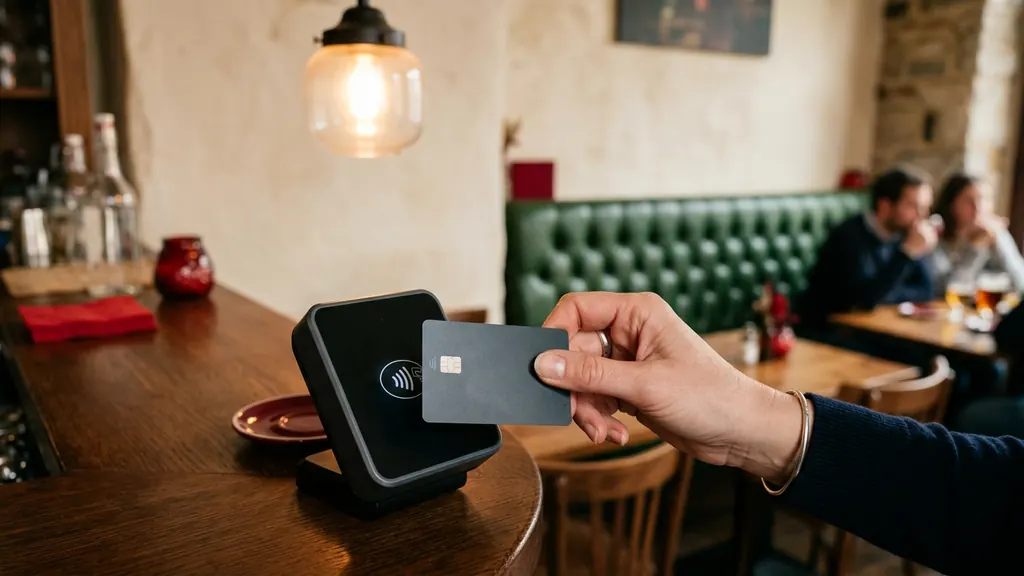
Comparator Neobanks
Compare side by side.
Compare now →
Frequently asked questions
Keep reading
Sophie L. worked eight years in a Belgian bank branch, first as a credit adviser and then in customer relations, before going independent in 2021 and settling in Louvain-la-Neuve. Her work starts with the issuers' official fee schedules, from the high-street banks (ING, BNP Paribas Fortis, KBC, Belfius) to the neobanks (Revolut, N26, Wise), reduced to five comparable lines: annual fee, currency conversion charge, borrowing rate, spending limits and bundled insurance. Every price on this site carries the date it was checked: the annual-fee grid was gone through line by line on 12 August 2026, after Belfius moved its Beats Star package to 5.90 € a month in February. If an issuer does not publish a figure, she writes that down instead of estimating it. For readers who moved to Belgium, she spells out what a Belgian issuer expects from an applicant with no local credit history.