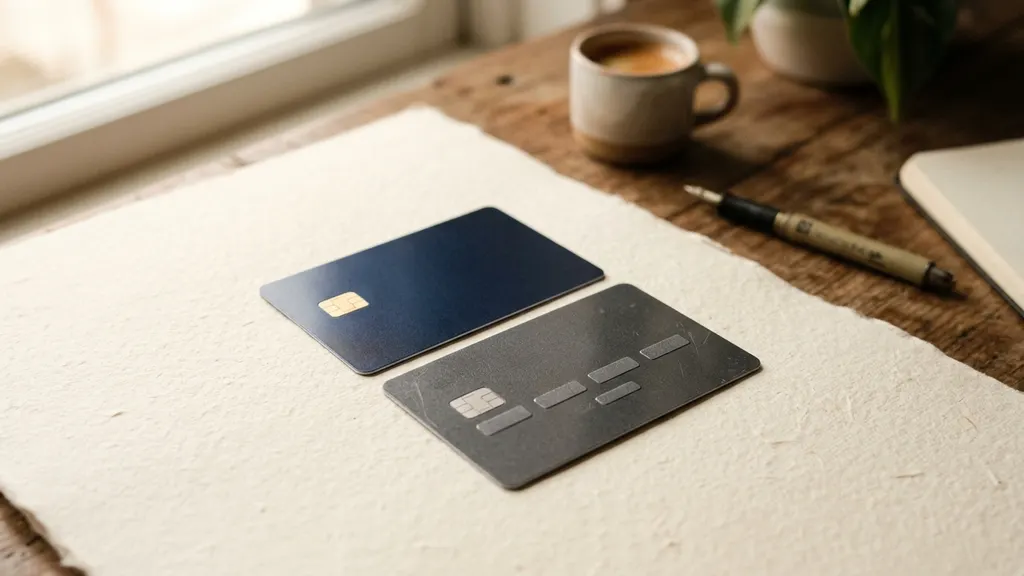
Revolut claims 370,000 Belgian customers and has been issuing Belgian IBANs (BE prefix) since May 2025. bunq, licensed by the Dutch central bank (DNB), is less visible in Belgium but has one unique selling point among neobanks: Bancontact support. The right choice depends on what you need from a neobank in daily Belgian life.
How Much Do Revolut and bunq Cost per Month?
Revolut offers a free Standard plan that includes a Belgian IBAN, a Visa card, interbank exchange rates (capped at €1,000/month), and €200 in fee-free ATM withdrawals. bunq has a Free plan at €0, but it's too limited for real use — no sub-accounts, ATM withdrawals at €2.99 each — and mostly serves as a demo.
In practice, the meaningful comparison starts between Revolut Standard (€0) and bunq Core (€3.99/month).
| Revolut Standard | Revolut Plus | bunq Core | bunq Pro | |
|---|---|---|---|---|
| Price/month | €0 | €3.99 | €3.99 | €9.99 |
| IBAN | BE | BE | NL | NL |
| Card | Visa | Visa | Mastercard | Mastercard |
| FX fees (non-EUR) | 0% (≤ €1,000/month) | 0% (≤ €1,000/month) | 0.5% | 0.5% |
| ATM withdrawals | €200/month free | €200/month free | 5 × €0.99 | 6 free/month |
| Bancontact | No | No | Yes | Yes |
| Sub-accounts | Unlimited vaults | Unlimited vaults | 1 | 25 |
Revolut is raising its Premium (€9.99 → €10.99) and Metal (€16.99 → €18.99) prices on 9 July 2026. Standard and Plus remain unchanged.
Is bunq Free Enough for Daily Use?
No. Each ATM withdrawal costs €2.99, instant SEPA transfers are charged €0.70, and there are no sub-accounts. bunq Free exists to try the app, not to live on. For real use, budget at least bunq Core at €3.99/month.
Which IBAN for Belgium: BE or NL?
Revolut issues a Belgian IBAN (BE prefix) since May 2025. bunq issues a Dutch IBAN (NL prefix). EU SEPA regulations prohibit creditors from refusing a European IBAN. Reality is more nuanced.
What this means for you: an NL IBAN works fine for standard transfers (salary, taxes, health insurance). But some Belgian direct debit systems block non-BE IBANs at the online form stage. It's a form validation bug, not a legal refusal, but you're the one who has to call customer service to fix it.
In spring 2025, I tested N26's German IBAN on five Belgian direct debits: three went through, two were rejected (Proximus and a home insurance provider). bunq's Dutch IBAN generates the same kind of friction.
If you plan to use bunq as your main account with salary domiciliation, verify that your employer and creditors accept an NL IBAN before switching. Revolut's Belgian IBAN avoids this issue entirely.
How Do Foreign Exchange Fees Compare?
Revolut converts at the interbank rate with zero markup, up to €1,000 per month on the Standard plan. Beyond that, a 0.5% fee applies (waived from Premium at €9.99/month). bunq charges a flat 0.5% on all plans, with no exception.
Concrete example: an £800 purchase in London, converted at approximately €930. With Revolut Standard, you pay €930 (within the monthly allowance). With bunq Core, you pay €934.65 — that's €4.65 in FX fees. Over a year with €5,000 in non-EUR spending, the gap reaches €25. For a full guide on foreign payment fees, see our dedicated comparison.
Revolut wins on FX. If your non-EUR spending is limited to one or two short trips a year, the difference stays modest. Beyond three trips, it becomes a factor.
Do You Need Bancontact in a Belgian Neobank?
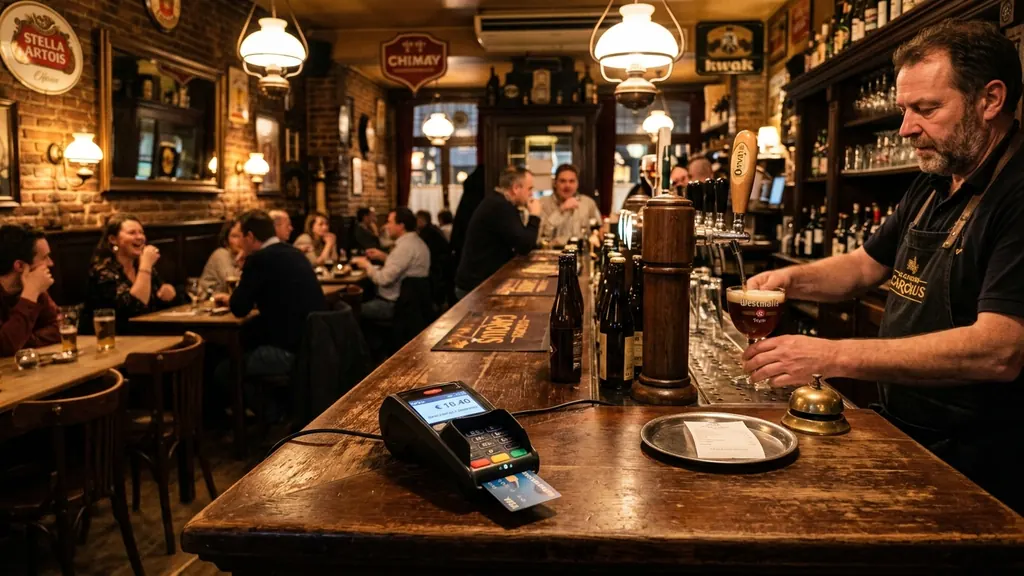
Bancontact accounts for 78% of online transactions in Belgium (Worldline 2025 figures). Parking meters, EV charging stations (Ionity, TotalEnergies), Belgian e-commerce (Bol.com, Coolblue), in-store QR codes: Bancontact is the default local payment reflex.
bunq is the only neobank that integrates Bancontact into its app. QR code payments, Bancontact Pay (formerly Payconiq by Bancontact, rebranded spring 2026), and Bancontact direct debits all work. Revolut, N26, and Wise don't offer it.
In practice, Revolut's lack of Bancontact doesn't prevent in-store payments — the Visa card works on the same terminals. But for online payments on Belgian sites that only offer Bancontact (still common), or for scanning a parking QR code, you need another solution.
What this means for you: if you keep an account at a traditional Belgian bank (ING, BNP, KBC), Revolut's missing Bancontact is a non-issue. If you want to consolidate everything into one neobank, bunq has a real advantage.
Which Profile Suits Revolut or bunq?
Revolut fits if you travel regularly outside the eurozone, want a Belgian IBAN at zero monthly cost, and already have a Belgian bank account for Bancontact. It's the default companion neobank. For a full Revolut review, see our dedicated article.
bunq fits if you want a primary account in Belgium with built-in Bancontact and advanced budgeting (sub-accounts, automatic rules). The €3.99/month for bunq Core makes sense if you're replacing your traditional bank. More details in our bunq Belgium review.
My take after using both in the first half of 2026: Revolut Standard at €0 remains hard to beat as a second account for travel and foreign currency purchases. If I had to pick one neobank to manage everything in Belgium — salary, bills, groceries, parking — bunq Core with Bancontact would simplify daily life. The sticking point remains the NL IBAN, which still causes friction with some Belgian administrative processes.
For a comparison of all 4 neobanks available in Belgium, or to find the right card through our quick quiz, the links are here.
Comparator Neobanks
Compare side by side.
Compare now →
Frequently asked questions
Keep reading
Sophie L. worked eight years in a Belgian bank branch, first as a credit adviser and then in customer relations, before going independent in 2021 and settling in Louvain-la-Neuve. Her work starts with the issuers' official fee schedules, from the high-street banks (ING, BNP Paribas Fortis, KBC, Belfius) to the neobanks (Revolut, N26, Wise), reduced to five comparable lines: annual fee, currency conversion charge, borrowing rate, spending limits and bundled insurance. Every price on this site carries the date it was checked: the annual-fee grid was gone through line by line on 12 August 2026, after Belfius moved its Beats Star package to 5.90 € a month in February. If an issuer does not publish a figure, she writes that down instead of estimating it. For readers who moved to Belgium, she spells out what a Belgian issuer expects from an applicant with no local credit history.